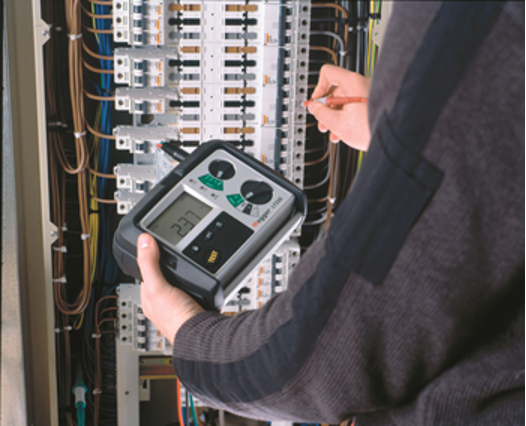
What is Loop Impedance?
Loop impedance is a way to measure how much a circuit resists the flow of electric current when something goes wrong, like a short circuit. If the resistance (impedance) is low, more current can flow, which helps safety devices like circuit breakers or fuses react quickly and shut off the power to prevent damage or danger. Why is Loop Impedance Testing Important? Loop impedance testing is done to check if an electrical circuit is safe and working properly. It helps make sure that protective devices will work fast in case of a fault. This test is usually done at power outlets and other points in the system. How Does the Test Work?
- A special tool called a loop impedance tester is used.
- The tester sends a small current through the circuit.
- It then measures the voltage drop caused by this current.
- Using this information, it calculates the impedance (resistance) in ohms.
- The live (phase) wire
- The neutral wire
- The earth (protective) wire
- Circuit breakers
- Fuses
- RCDs (Residual Current Devices) ...should be working normally and left in place during the test.
- To find problems – It helps spot things like loose connections, damaged wires, or faulty devices.
- To follow safety rules – Many countries require regular testing by law.
- To prevent danger – If impedance is too high, safety devices might not work properly, increasing the risk of fire or electric shock.
- To fix faults – It helps electricians figure out what's wrong when there's an electrical issue.